0 of 12 answered0 correct
- 1Question 1
A pencil standing in a glass of water looks bent at the water surface. What causes this?
- 2Question 2
A ray of light passes obliquely from air into glass. Which way does it bend?
- 3Question 3
The refractive index of glass is 1.5 and the speed of light in air is 3 × 10⁸ m/s. What is the speed of light in the glass?
- 4Question 4
Which statement is Snell's law of refraction?
- 5Question 5
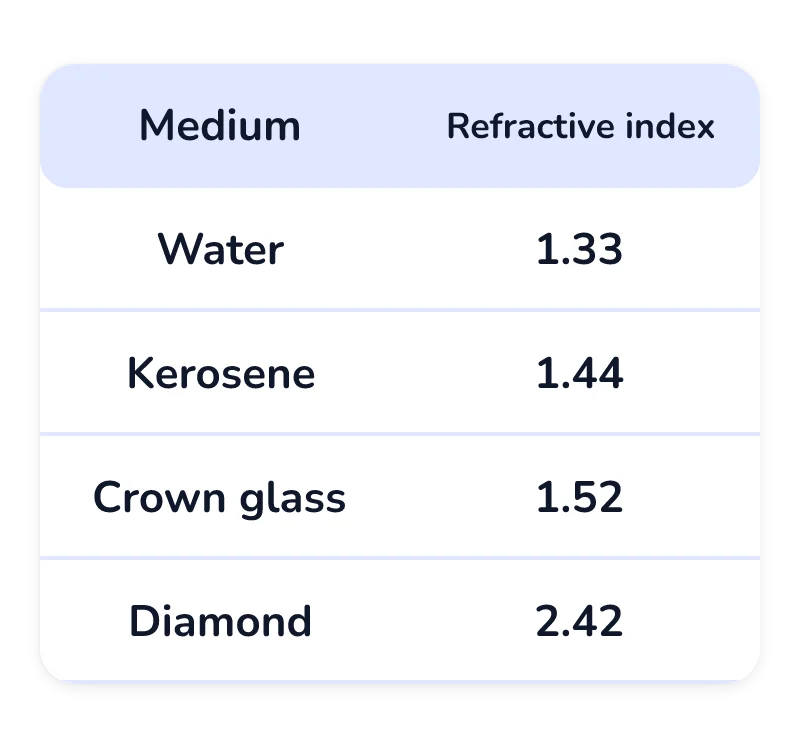
The table gives the refractive index of four media. About how many times faster does light travel in water than in diamond?
- 6Question 6
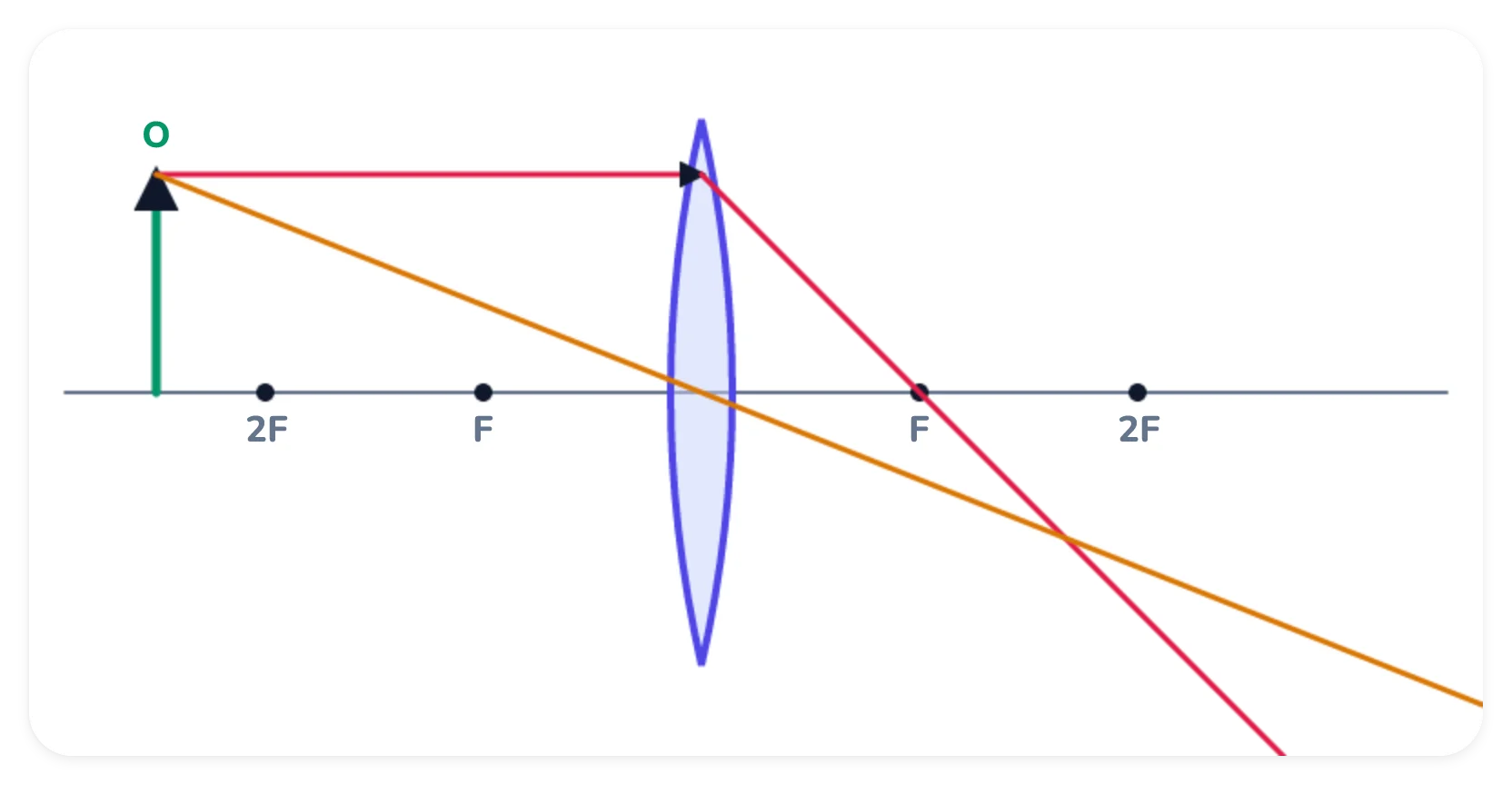
The diagram shows an object placed beyond 2F in front of a convex lens. Where is the image formed, and what is it like?
- 7Question 7
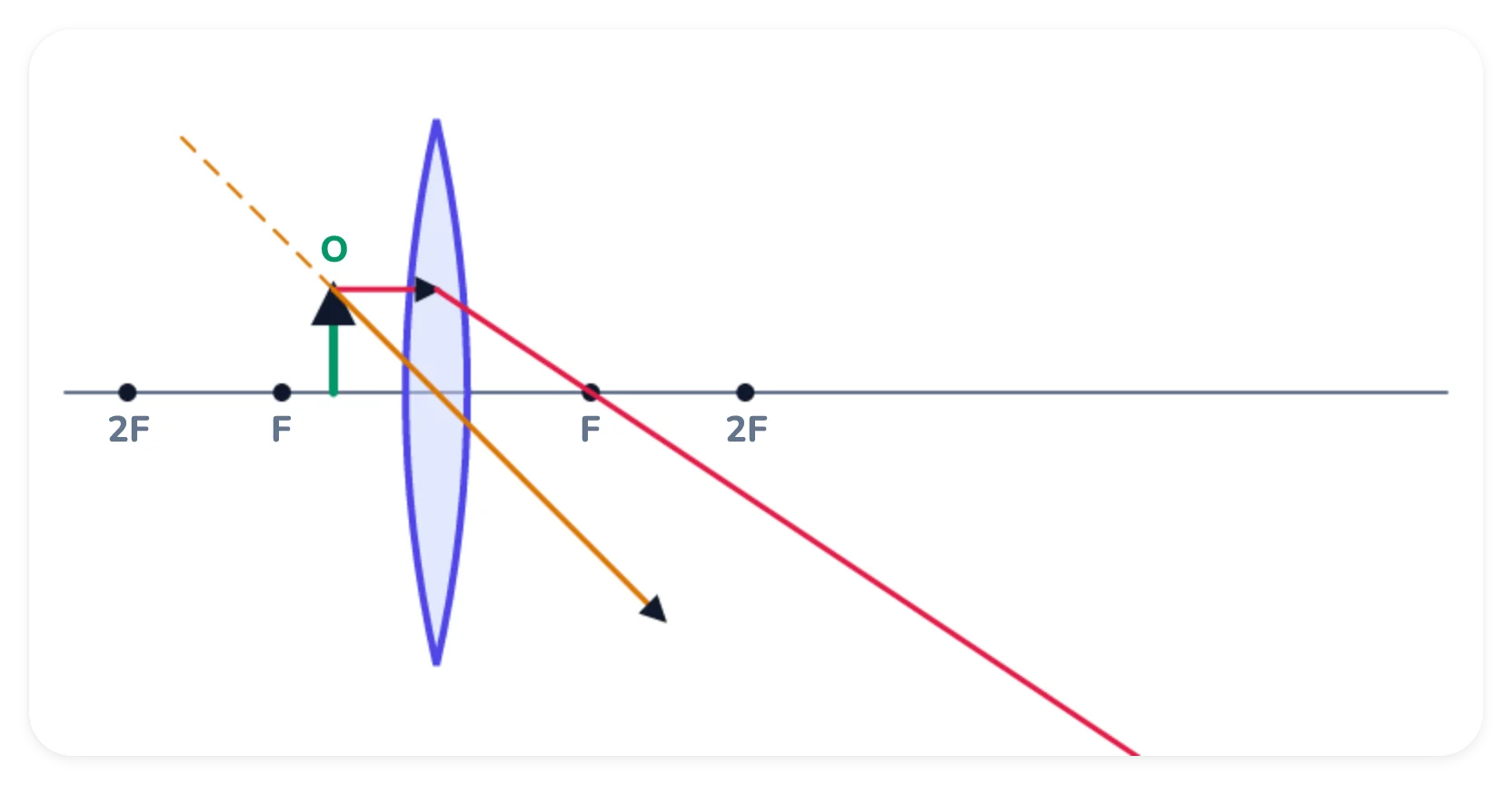
The diagram shows an object placed between the optical centre and F of a convex lens. Where is the image formed, and what is it like?
- 8Question 8
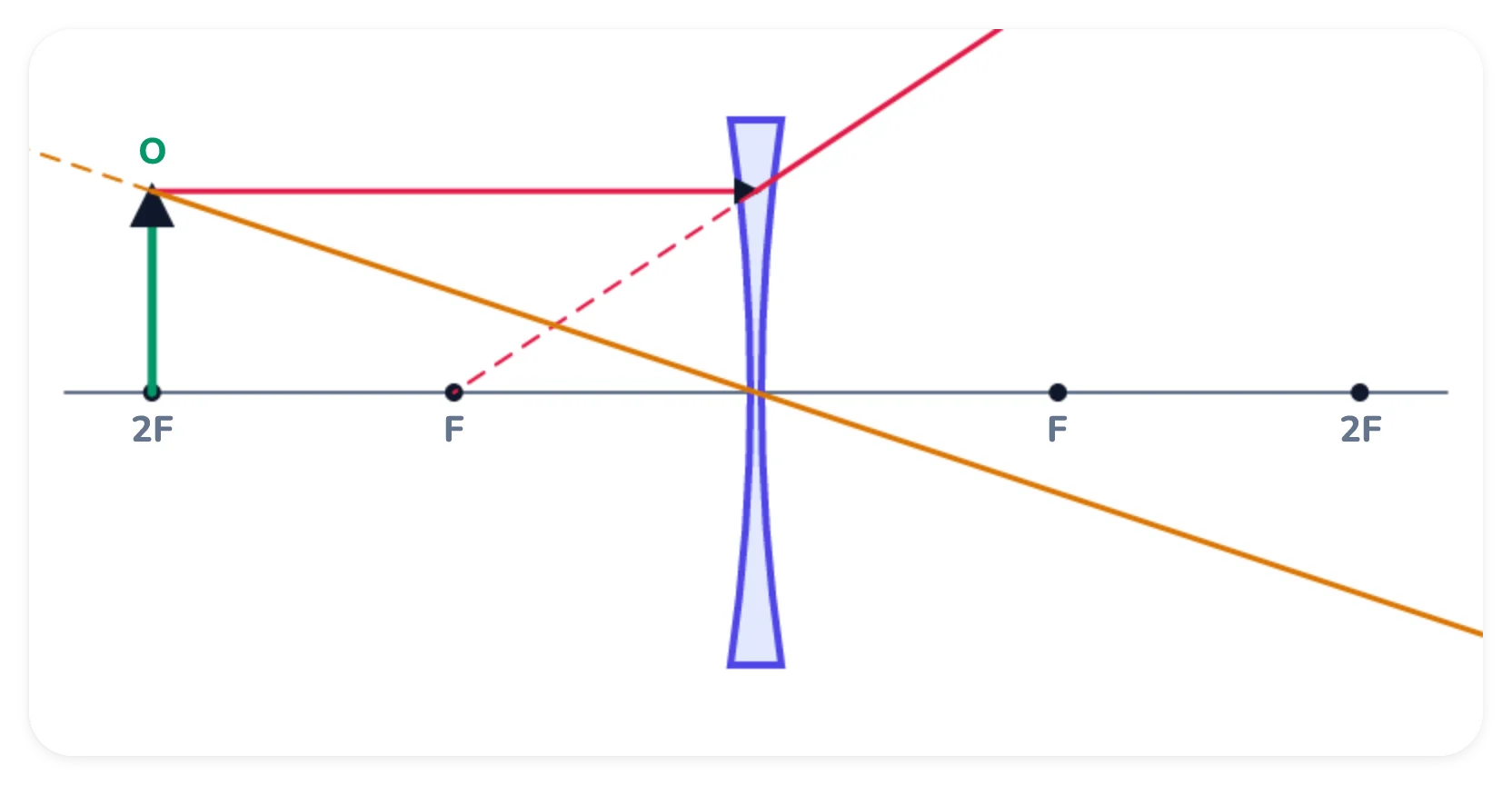
The diagram shows an object in front of a concave lens. Where is the image formed, and what is it like?
- 9Question 9
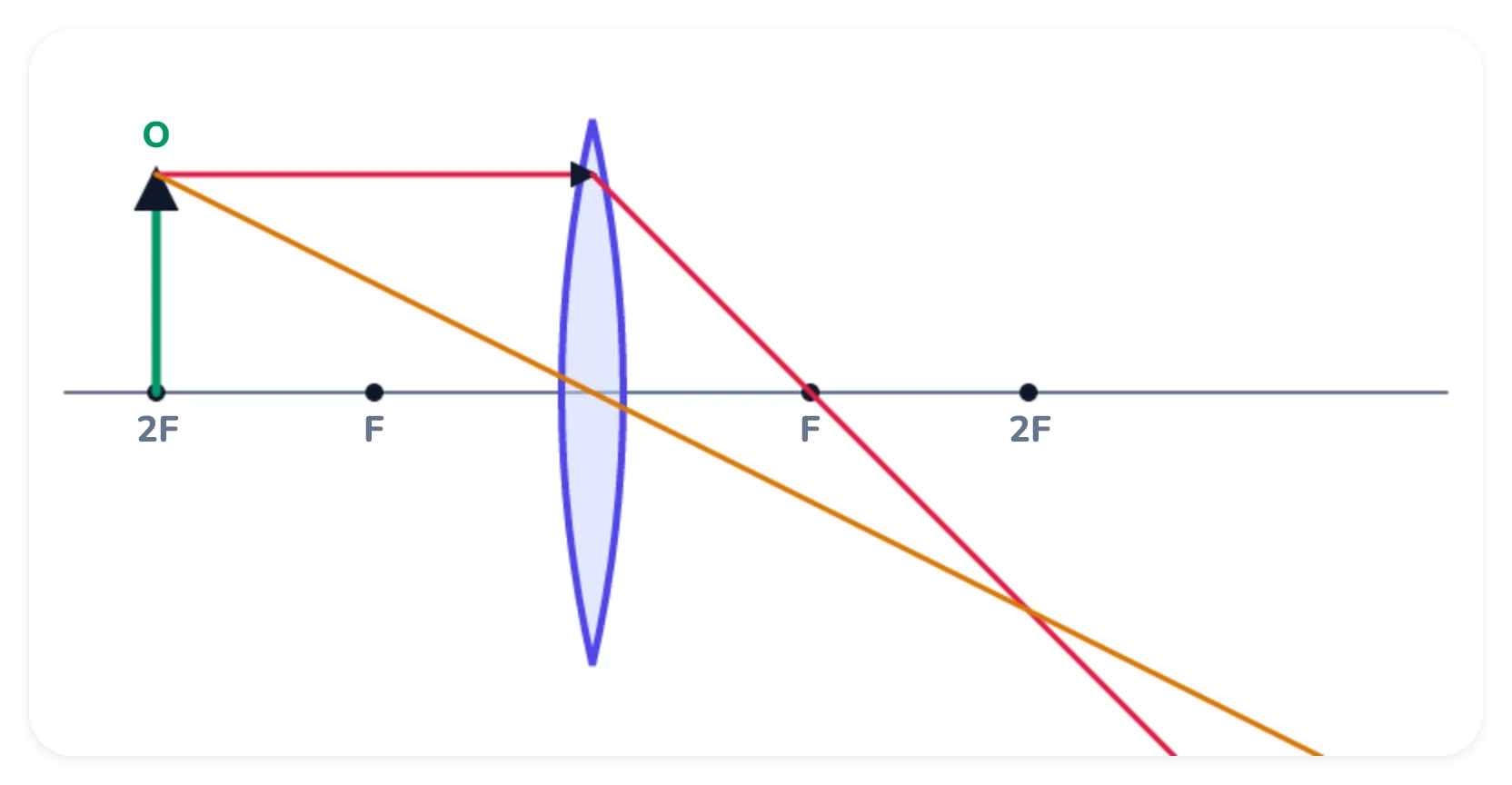
The diagram shows an object placed exactly at 2F in front of a convex lens. Where is the image formed, and what is it like?
- 10Question 10
A ray of light passes through a rectangular glass slab. How does the emergent ray compare with the incident ray?
- 11Question 11
To use a convex lens as a magnifying glass, where must the object be placed?
- 12Question 12
A lens is thicker at the edges than in the middle. What kind of lens is it, and what does it do to parallel rays?