12 pytań
Class 10 Light: Reflection and Spherical Mirrors
Class 10 · laws of reflection, images in plane, concave and convex mirrors, ray diagrams to read, sign convention and uses of mirrors. CBSE Chapter 9, part 1.
Pytania
12 pytań w tej wersji · Poprawne odpowiedzi są ukryte, żebyś najpierw sprawdził się sam.
- 1Pytanie 1
A ray of light strikes a plane mirror at an angle of 30° to the normal. What is the angle between the incident ray and the reflected ray?
A30°B120°C60°D90° - 2Pytanie 2
Which set of properties describes the image formed by a plane mirror?
AVirtual, erect, the same size as the object and laterally invertedBReal, inverted, the same size as the object and laterally invertedCVirtual, erect and magnifiedDReal, erect and diminished - 3Pytanie 3
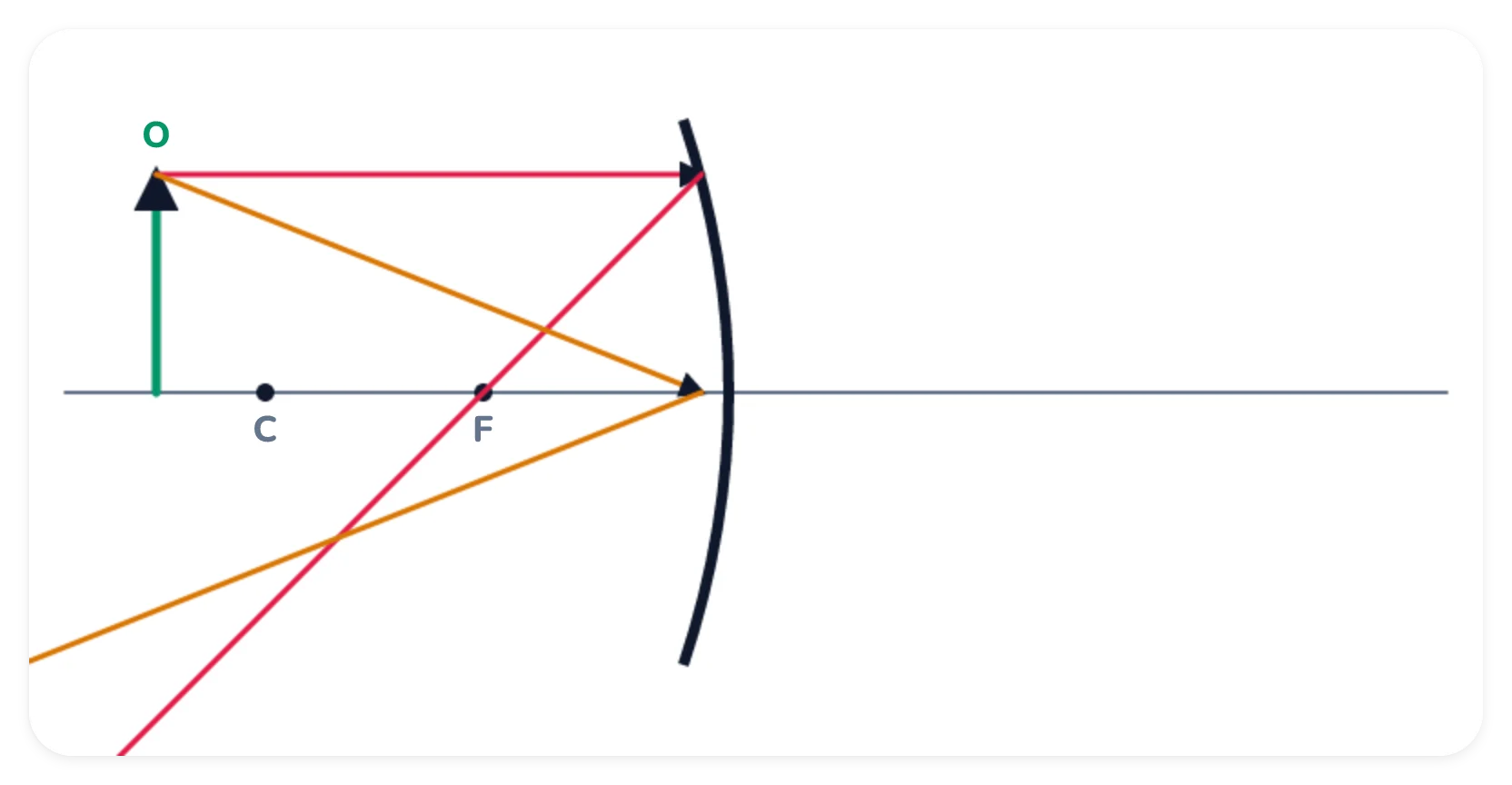
The diagram shows an object placed beyond the centre of curvature C of a concave mirror. Where is the image formed, and what is it like?
ABeyond C, real, inverted and magnifiedBAt C, real, inverted and the same sizeCBetween F and C, real, inverted and diminishedDBehind the mirror, virtual, erect and magnified - 4Pytanie 4
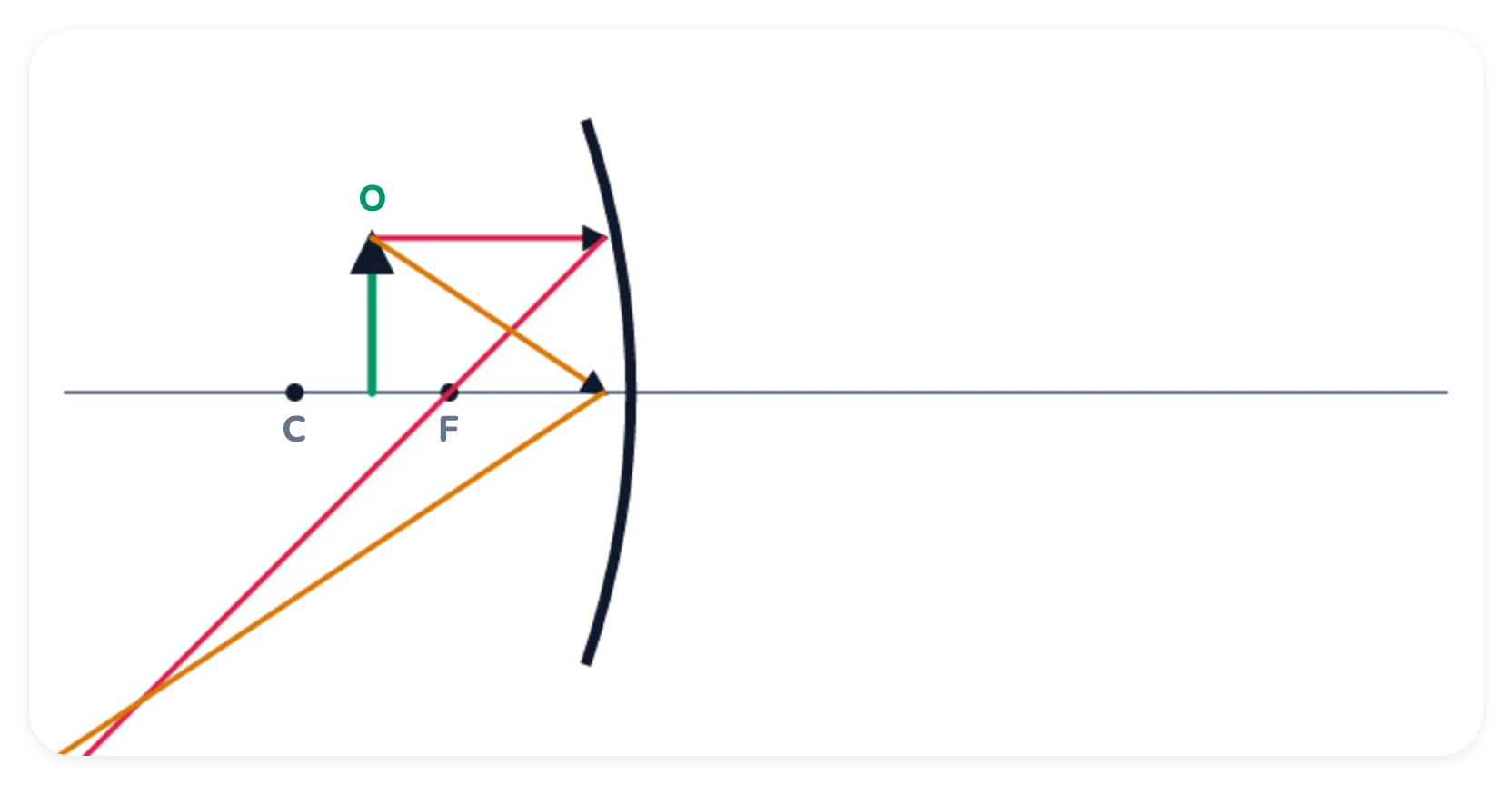
The diagram shows an object placed between F and C in front of a concave mirror. Where is the image formed, and what is it like?
ABetween F and C, real, inverted and diminishedBBeyond C, real, inverted and magnifiedCAt F, highly diminishedDBehind the mirror, virtual and erect - 5Pytanie 5
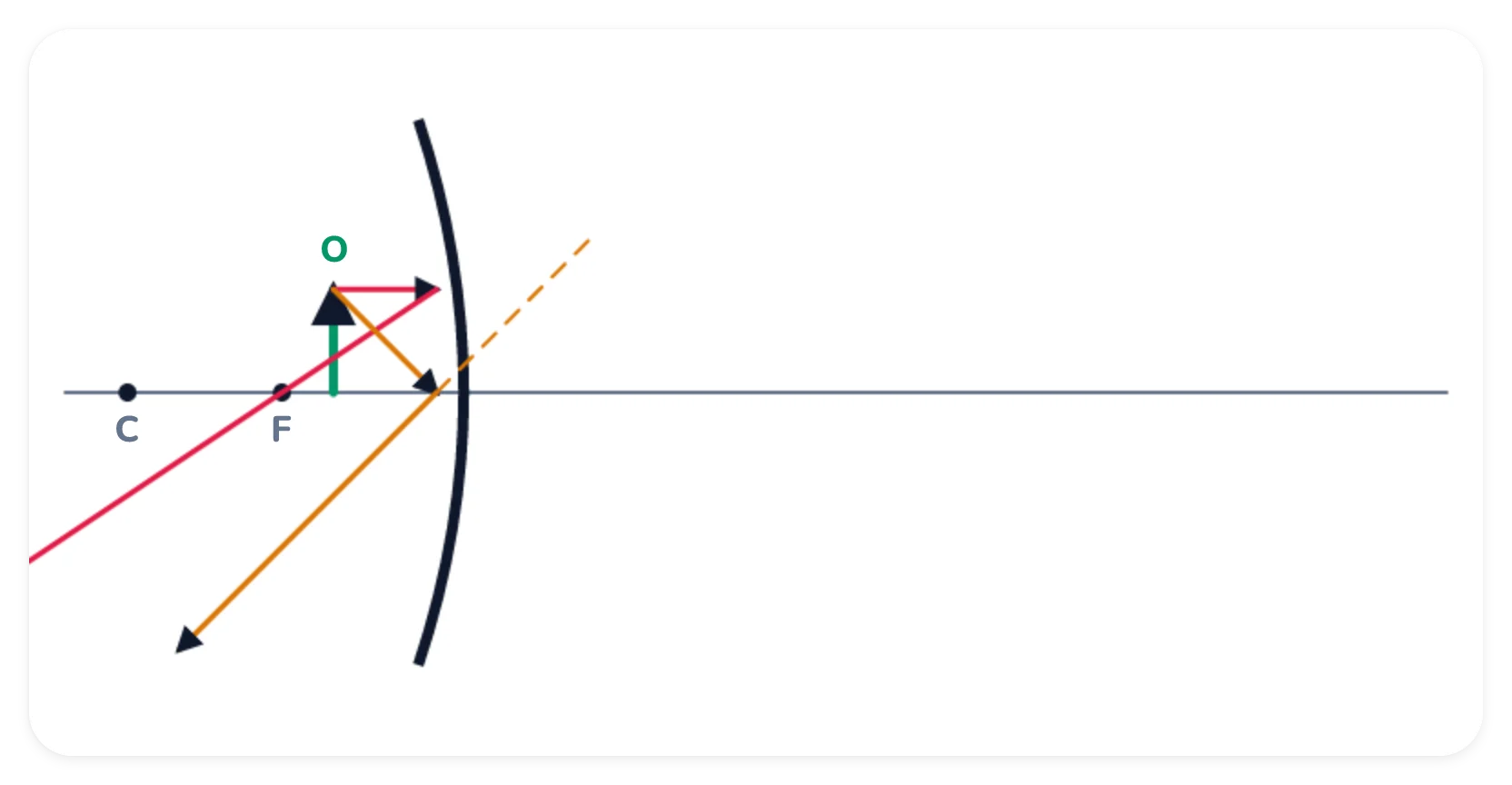
The diagram shows an object placed between the pole P and the focus F of a concave mirror. Where is the image formed, and what is it like?
ABehind the mirror, virtual, erect and magnifiedBBeyond C, real, inverted and magnifiedCBetween F and C, real and invertedDAt infinity - 6Pytanie 6
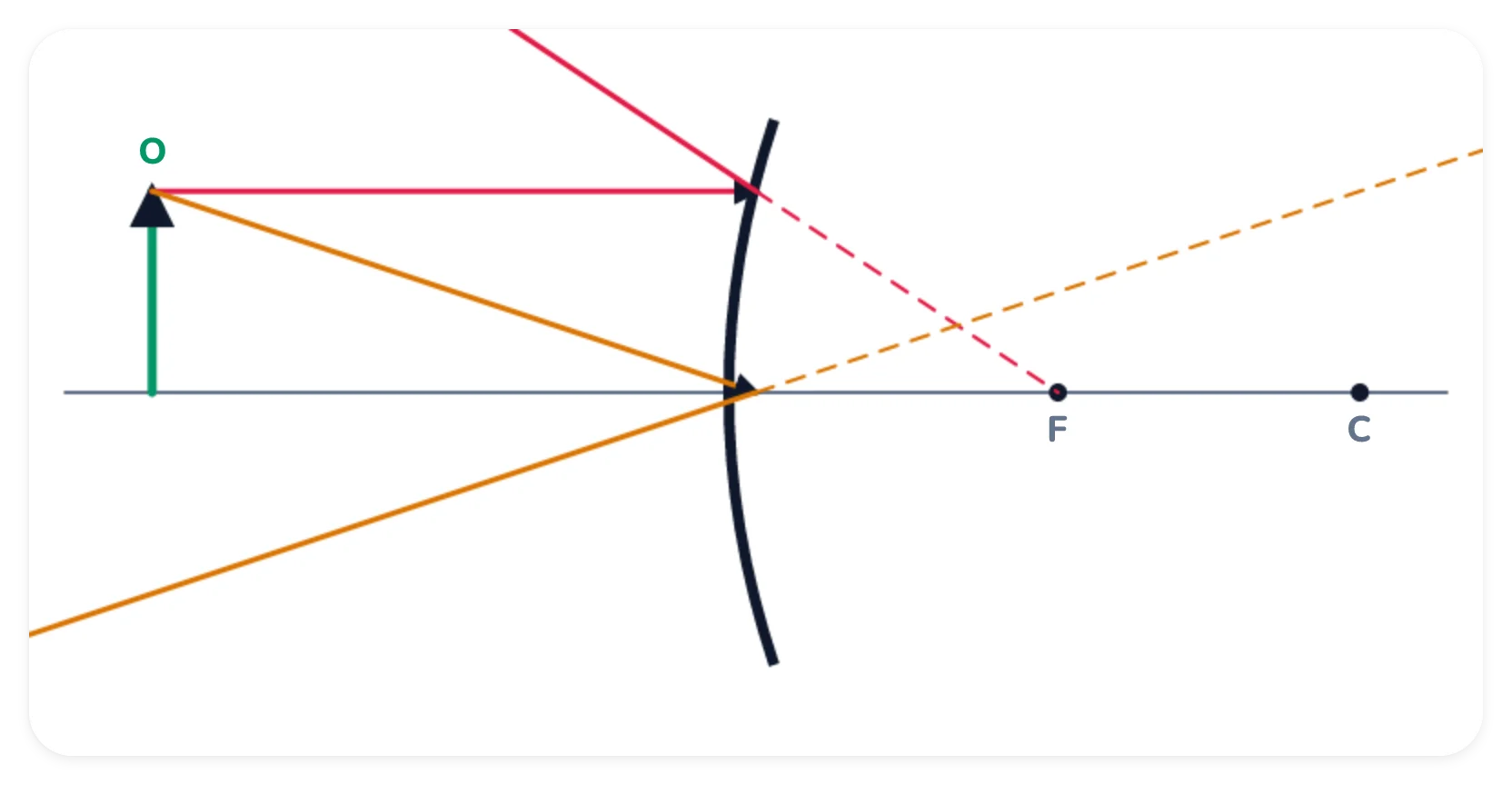
The diagram shows an object in front of a convex mirror. Where is the image formed, and what is it like?
AIn front of the mirror, real and invertedBAt the centre of curvature, the same sizeCBehind the mirror between P and F, virtual, erect and diminishedDBehind the mirror beyond F, virtual and magnified - 7Pytanie 7
Why does a dentist use a concave mirror to examine teeth?
AIt gives a wide field of viewBIt forms a real image on the toothCIt makes the tooth look smaller, sharper and brighter than it really isDA tooth placed within its focus gives a magnified, erect, virtual image - 8Pytanie 8
Why are convex mirrors used as rear-view mirrors in vehicles?
AThey give an erect, diminished image and a wide field of viewBThey magnify distant vehicles so they are easier to seeCThey form real images that can be seen from any angleDThey reflect more light than plane mirrors - 9Pytanie 9
A spherical mirror has a radius of curvature of 30 cm. What is its focal length?
A30 cmB60 cmC15 cmD7.5 cm - 10Pytanie 10
According to the New Cartesian sign convention, the focal length of a concave mirror is taken as …
Apositive, because it is measured along the incident lightBnegative, because the focus is in front of the mirrorCzero at the poleDpositive or negative depending on where the object is - 11Pytanie 11
An image formed by a concave mirror has a magnification of −2. What is the image like?
AVirtual, erect and half the size of the objectBReal, erect and twice the size of the objectCVirtual, inverted and twice the sizeDReal, inverted and twice the size of the object - 12Pytanie 12
What is the name of the straight line passing through the pole and the centre of curvature of a spherical mirror?
AThe apertureBThe principal axisCThe normalDThe radius of curvature
Chcesz własny?
Zacznij od pomysłu, dokumentu lub odrobiny ciekawości. Stworzymy quiz razem.